
Sports Injuries treatment in Winnipeg
From hockey to running, sprains, strains and overuse injuries can sideline you.



We combine chiropractic care and athletic therapy, and use VALD strength testing to show when you're ready to get back in the game.
Is this what you feel?
Common signs of sports injuries, and what usually causes it.
What it feels like
- Sudden pain during a game or practice
- Swelling or bruising around a joint or muscle
- Pain that builds up over weeks of training
- Loss of strength, speed or power
- A joint that feels loose or unstable
- Pain that stops you from playing at full effort
What usually causes it
- Collisions and falls in contact sports like hockey and football
- Quick stops, cuts and landings
- Doing too much too soon in training
- Not enough recovery between games or sessions
- Weakness or imbalances between sides
- Coming back too early from a past injury
An assessment, not a sales pitch.
We ask about your sport, position, training schedule and how the injury happened, then do a hands-on exam with movement and orthopedic tests. VALD strength testing helps us measure strength and side-to-side differences, and GaitScan can be used for running or foot-related problems. We explain the findings, set goals around your season and start treatment right away.
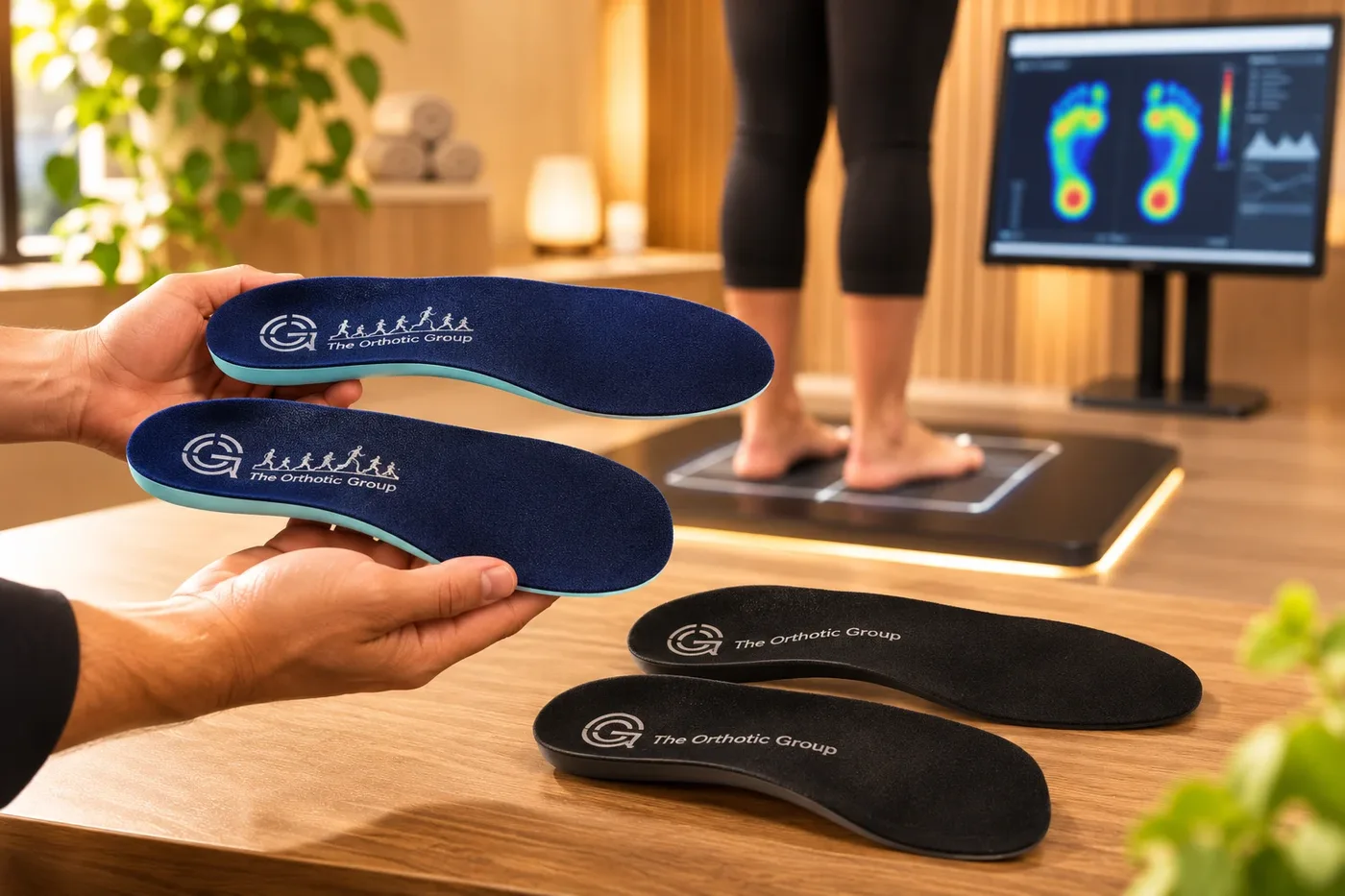
Your plan for sports injuries.
Every plan is built from your exam and testing, and adjusted as you improve.
Chiropractic care
Adjustments to keep joints moving well.
Athletic therapy
Sport-specific rehab, taping and return-to-play drills.
Massage therapy
Helping muscles recover from heavy training.
VALD strength testing
Tracking strength, power and balance between sides.
Bracing and support
Bauerfeind braces or compression fitted in clinic when needed.
Return-to-play plan
Clear steps from rehab back to full training and games.
What you can do at home.
- Use ice for fresh injuries and heat for stiff, tight muscles if it helps.
- Keep training the parts of your body that are not injured.
- Do your rehab exercises as part of your regular training.
- Sleep well and eat well, since both help recovery.
- Do not return to full play until you have been cleared.
How long it usually takes
Minor strains and bruises may settle in days to a couple of weeks, while ligament and tendon injuries often take several weeks or more. Return depends on strength, control and the demands of your sport. Testing helps show when you are truly ready, not just pain-free.
When to see a doctor right away
Stop playing and get medical care right away for any suspected concussion, such as headache, confusion, dizziness or vomiting after a hit. Neck injuries with numbness or weakness, a joint that looks out of place or a limb you cannot put weight on also need urgent care.
Serving all of Winnipeg
People come to us for help with sports injuries from all over Winnipeg, including The Maples, Garden City, Tyndall Park, West Kildonan, the North End, St. James, St. Vital, Transcona and Fort Garry, as well as Stonewall and Selkirk. Our clinic is at 2358 McPhillips St #1, near Garden City Shopping Centre. We direct bill MPI and WCB, walk-ins are welcome, and our team speaks English, Punjabi and Tagalog. When imaging is needed, we refer directly for digital X-rays at Thrive Chiropractic and ultrasound at Atlas Radiology (we refer, they do the scan).
Your questions, answered.
Can you help me play through the season?
We can often help you manage an injury and keep playing safely when it makes sense. If continuing would risk making it worse, we will tell you honestly.
What does VALD testing show?
It measures strength and force from each side of your body. This helps us spot weakness and track your progress back to sport.
Do you work with coaches and teams?
We are happy to work with coaches and teams. With your permission, we can share return-to-play updates to help with your plan.
We also help with.
Ready to move better?
Book your first assessment with Dr. Raman Gill. Walk-ins are welcome, and we direct bill most insurance plans.
Winnipeg, MB R2V 4J6
This page is general information, not a diagnosis. Every patient is assessed individually.