
Plantar Fasciitis treatment in Winnipeg
Sharp heel pain with your first steps in the morning is the classic sign of an irritated plantar fascia under the foot.
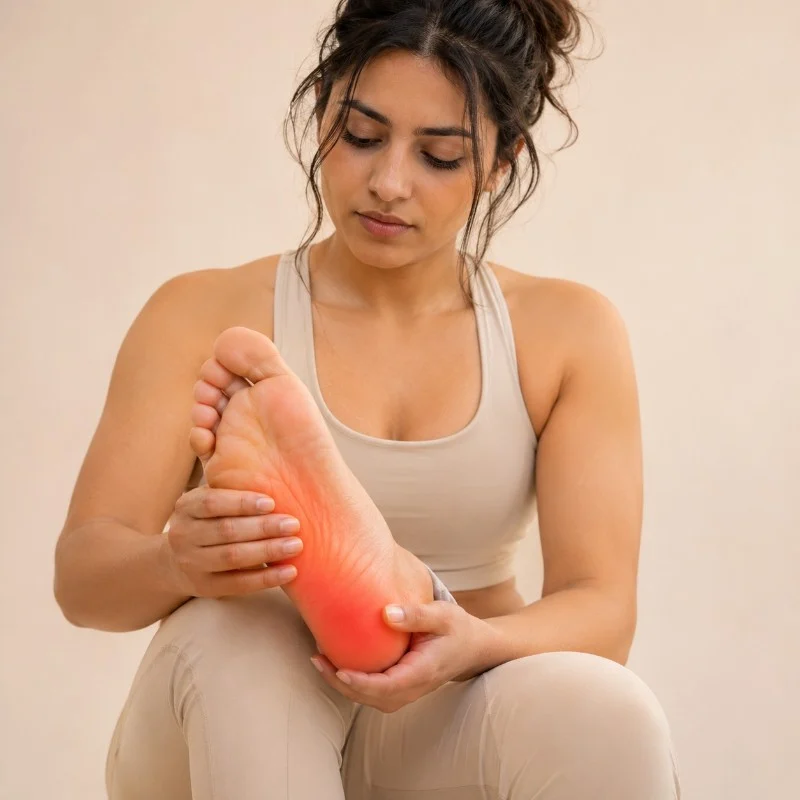


We loosen the calf and foot, give you stretches and strengthening, and use GaitScan to see if custom orthotics would take the load off your heel.
Is this what you feel?
Common signs of plantar fasciitis, and what usually causes it.
What it feels like
- Sharp heel pain with the first steps in the morning
- Pain after sitting for a while and then standing up
- Pain that eases with walking but returns later in the day
- Tenderness on the bottom of the heel
- Pain after long periods of standing
- Tight calves and ankles
What usually causes it
- Long hours standing or walking on hard floors
- A sudden increase in walking, running or work hours
- Tight calf muscles
- Flat feet or high arches
- Worn-out or unsupportive shoes
- Weight gain
An assessment, not a sales pitch.
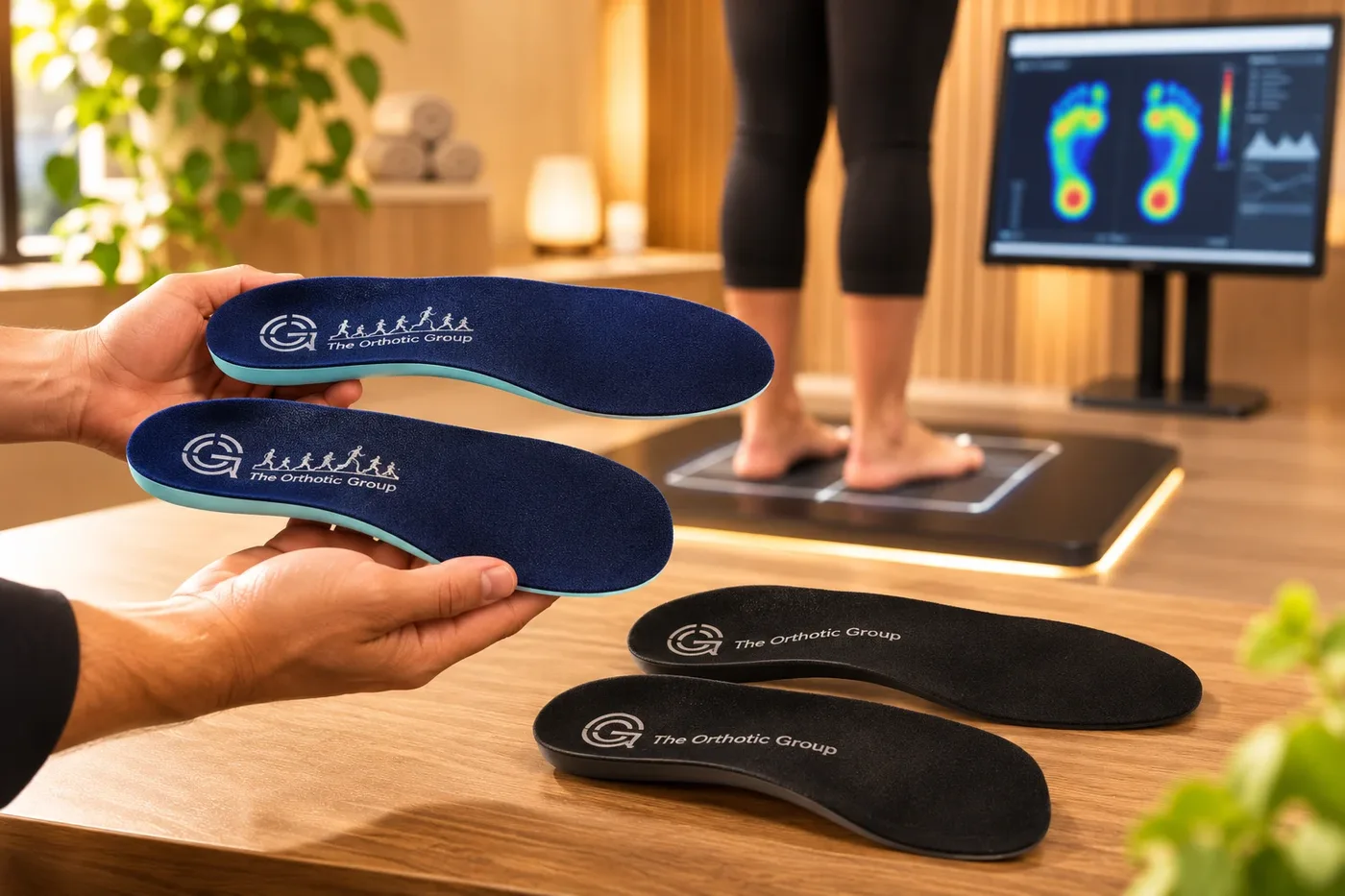
We ask about your work, your footwear and when the pain is worst, then check your foot, ankle and calf flexibility and strength. A GaitScan shows how pressure spreads across your feet as you walk, which tells us if your heel is taking too much load. We explain the results and start with hands-on treatment and a few stretches to try at home.
Your plan for plantar fasciitis.
Every plan is built from your exam and testing, and adjusted as you improve.
Soft-tissue therapy
Releasing the tight calf and the muscles under the foot.
Foot and ankle mobilization
Helping stiff joints move better to share the load.
Stretching and strengthening
Calf stretches and foot strengthening to support the plantar fascia.
GaitScan and custom orthotics
Orthotics built from your scan when needed to take pressure off the heel.
Footwear advice
Helping you choose shoes with the right support and cushioning.
Load management
Adjusting standing, walking or running so the tissue can settle.
What you can do at home.
- Stretch your calves and the bottom of your foot before you get out of bed.
- Roll your foot over a frozen water bottle for a few minutes to ease pain.
- Avoid walking barefoot on hard floors.
- Wear supportive shoes, including around the house.
- Cut back on activities that make it worse for a while, rather than pushing through.
How long it usually takes
Plantar fasciitis often improves slowly, and many people notice change over several weeks to a few months. How long it takes depends on how long you have had it, your job and your footwear. Staying consistent with stretches and support usually speeds things up.
When to see a doctor right away
See a doctor if your heel pain started after a fall or jump, you cannot put weight on the foot, or there is swelling, redness and warmth with a fever. People with diabetes should get any foot sores, colour changes or numbness checked promptly.
Serving all of Winnipeg
People come to us for help with plantar fasciitis from all over Winnipeg, including The Maples, Garden City, Tyndall Park, West Kildonan, the North End, St. James, St. Vital, Transcona and Fort Garry, as well as Stonewall and Selkirk. Our clinic is at 2358 McPhillips St #1, near Garden City Shopping Centre. We direct bill MPI and WCB, walk-ins are welcome, and our team speaks English, Punjabi and Tagalog. When imaging is needed, we refer directly for digital X-rays at Thrive Chiropractic and ultrasound at Atlas Radiology (we refer, they do the scan).
Your questions, answered.
Do I need orthotics for plantar fasciitis?
Not always. GaitScan helps us see if your foot mechanics are adding to the problem. If they are, orthotics may help take strain off your heel.
Is a heel spur the same thing?
Not exactly. A heel spur is a bit of extra bone that some people have, often without pain. The pain usually comes from the irritated tissue, which is what we treat.
Why does it hurt most in the morning?
The tissue tightens up overnight while you rest. Your first steps stretch it suddenly, which causes that sharp pain. Gentle stretches before getting up can help.
We also help with.
Ready to move better?
Book your first assessment with Dr. Raman Gill. Walk-ins are welcome, and we direct bill most insurance plans.
Winnipeg, MB R2V 4J6
This page is general information, not a diagnosis. Every patient is assessed individually.