
Scoliosis treatment in Winnipeg
Scoliosis is a sideways curve of the spine that can cause uneven muscles, stiffness and back pain.
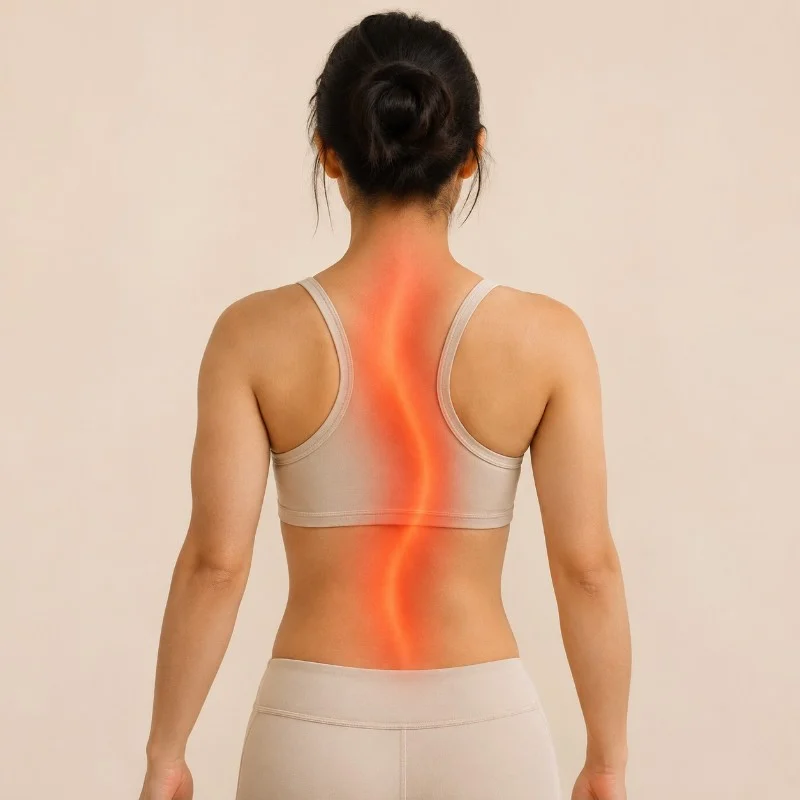

We can't straighten a structural curve, but we can ease the pain and stiffness that come with it through gentle adjustments, soft-tissue work and targeted exercises, and keep an eye on it over time.
Is this what you feel?
Common signs of scoliosis, and what usually causes it.
What it feels like
- One shoulder or hip that sits higher than the other
- A shoulder blade that sticks out more on one side
- A rib hump when bending forward
- Back stiffness or muscle tightness on one side
- Back pain or fatigue after standing or sitting a long time
- Clothes that hang unevenly
What usually causes it
- Idiopathic scoliosis, which has no known cause and often appears in the pre-teen or teen years
- Age-related wear in the spine in adults (degenerative scoliosis)
- A curve present from birth
- Some nerve or muscle conditions
- A functional curve from a leg length difference or muscle spasm
- Family history, which can raise the chance of developing it
An assessment, not a sales pitch.
We ask about when the curve was found, any past imaging or bracing, and where you feel pain or stiffness. Dr. Raman looks at your posture and shoulder, hip and rib position, does a forward bend test, checks how your spine moves and tests muscle strength on both sides; GaitScan can show if your feet or a leg length difference are adding uneven load. We explain what we can help with, refer you for imaging or to your doctor if the curve has not been properly measured, and start gentle care for pain and stiffness.
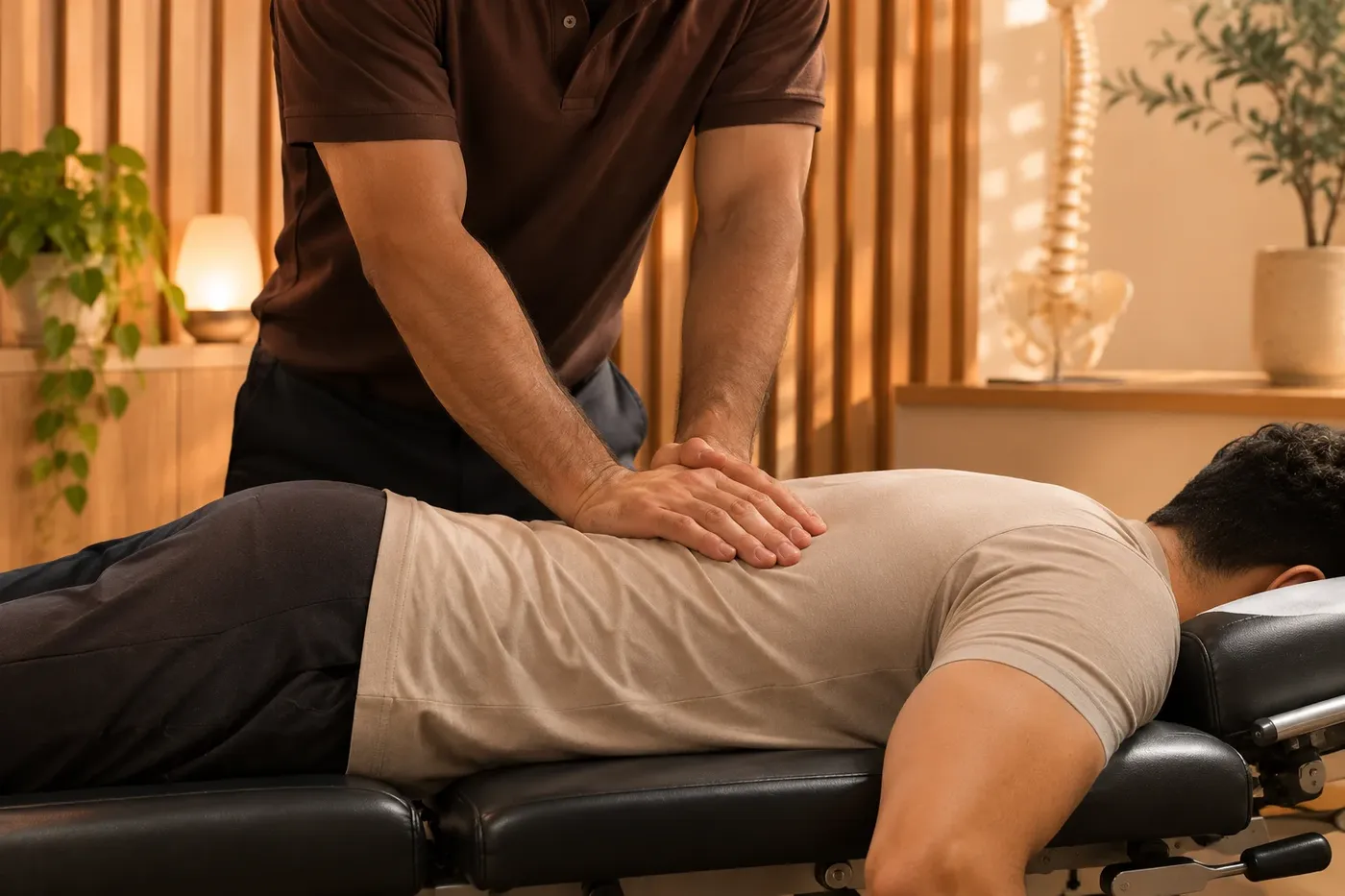
Your plan for scoliosis.
Every plan is built from your exam and testing, and adjusted as you improve.
Gentle chiropractic adjustments
Easing stiff joints along the curve to reduce pain and improve movement.
Soft-tissue and massage therapy
Relaxing muscles that tighten and work harder on one side.
Targeted exercises
Strengthening and stretching chosen for your curve to help balance the muscles.
GaitScan and custom orthotics
Checking foot pressure and, if helpful, making orthotics to improve how load is shared through your legs and pelvis.
Breathing and mobility work
Keeping the rib cage and spine moving as freely as possible.
Monitoring
Rechecking posture and symptoms over time and referring back to your doctor if anything changes.
What you can do at home.
- Stay active with activities you enjoy, such as walking, swimming or yoga
- Do your targeted exercises regularly, since consistency matters more than intensity
- Change positions often rather than standing or sitting in one spot for long
- Use heat on tight areas after a long day
- Keep track of any changes in your posture or symptoms and tell us or your doctor
How long it usually takes
Scoliosis is a long-term condition, so care focuses on easing pain and stiffness rather than fixing the curve. Many people notice less pain and better movement over several weeks, and some find occasional check-ins and a regular home routine help keep them comfortable. Children and teens who are still growing need regular checks with their doctor or a specialist.
When to see a doctor right away
See a doctor promptly if a child or teen's curve seems to be getting worse quickly, or if scoliosis comes with numbness, weakness, or changes in bladder or bowel control. Severe back pain, trouble breathing, or pain with fever or weight loss also needs a medical check.
Serving all of Winnipeg
People come to us for help with scoliosis from all over Winnipeg, including The Maples, Garden City, Tyndall Park, West Kildonan, the North End, St. James, St. Vital, Transcona and Fort Garry, as well as Stonewall and Selkirk. Our clinic is at 2358 McPhillips St #1, near Garden City Shopping Centre. We direct bill MPI and WCB, walk-ins are welcome, and our team speaks English, Punjabi and Tagalog. When imaging is needed, we refer directly for digital X-rays at Thrive Chiropractic and ultrasound at Atlas Radiology (we refer, they do the scan).
Your questions, answered.
Can chiropractic care straighten my scoliosis?
No. A structural scoliosis curve cannot be straightened with adjustments. Our care focuses on easing pain and stiffness, improving how you move and keeping an eye on changes.
Is exercise safe with scoliosis?
For most people, yes. Staying active and strong is helpful, and we can guide you on exercises suited to your curve.
Does my teen need a specialist?
Teens who are still growing should have their curve measured and monitored by their doctor, who may refer them to a specialist. We can work alongside that care.
We also help with.
Ready to move better?
Book your first assessment with Dr. Raman Gill. Walk-ins are welcome, and we direct bill most insurance plans.
Winnipeg, MB R2V 4J6
This page is general information, not a diagnosis. Every patient is assessed individually.