
Disc Pain & Herniated Disc treatment in Winnipeg
A bulging or herniated disc can cause sharp back pain, and sometimes pain down the leg.
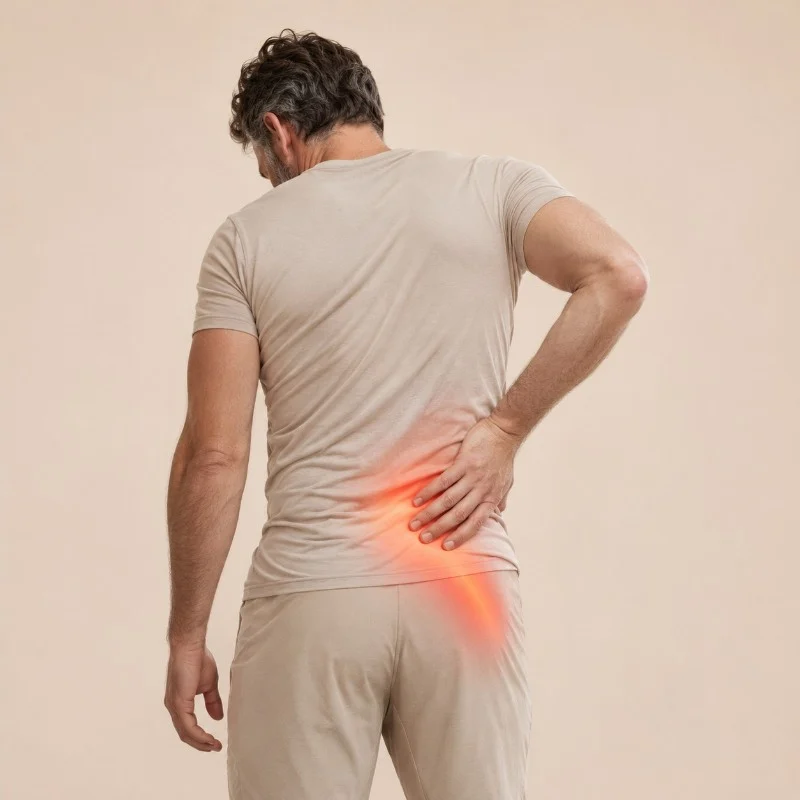


We use gentle, disc-friendly adjustments, positions and exercises that settle your pain, and a step-by-step strengthening plan. Most disc injuries improve with the right care, and we refer you for imaging if it's needed.
Is this what you feel?
Common signs of disc pain & herniated disc, and what usually causes it.
What it feels like
- Sharp or deep pain in the lower back
- Pain that is worse with sitting, bending forward or lifting
- Pain that increases with coughing or sneezing
- Pain, tingling or numbness travelling into the leg
- Stiffness and trouble standing up straight after sitting
- Feeling shifted or bent to one side
What usually causes it
- Lifting with a bent and twisted back
- Repeated bending and long hours of sitting
- Normal age-related changes in the discs
- A sudden strain or fall
- Weak core and hip muscles
- Smoking and low fitness, which can affect disc health
An assessment, not a sales pitch.
We ask how your pain started, which positions make it better or worse, and check for any warning signs. Dr. Raman tests your back movement, including repeated movements to see how your pain responds, does nerve tests, and checks leg strength, reflexes and feeling; VALD strength testing can show side-to-side differences. We explain what a disc problem means in plain terms, show you positions that ease your pain, and refer you for imaging only if your signs call for it.
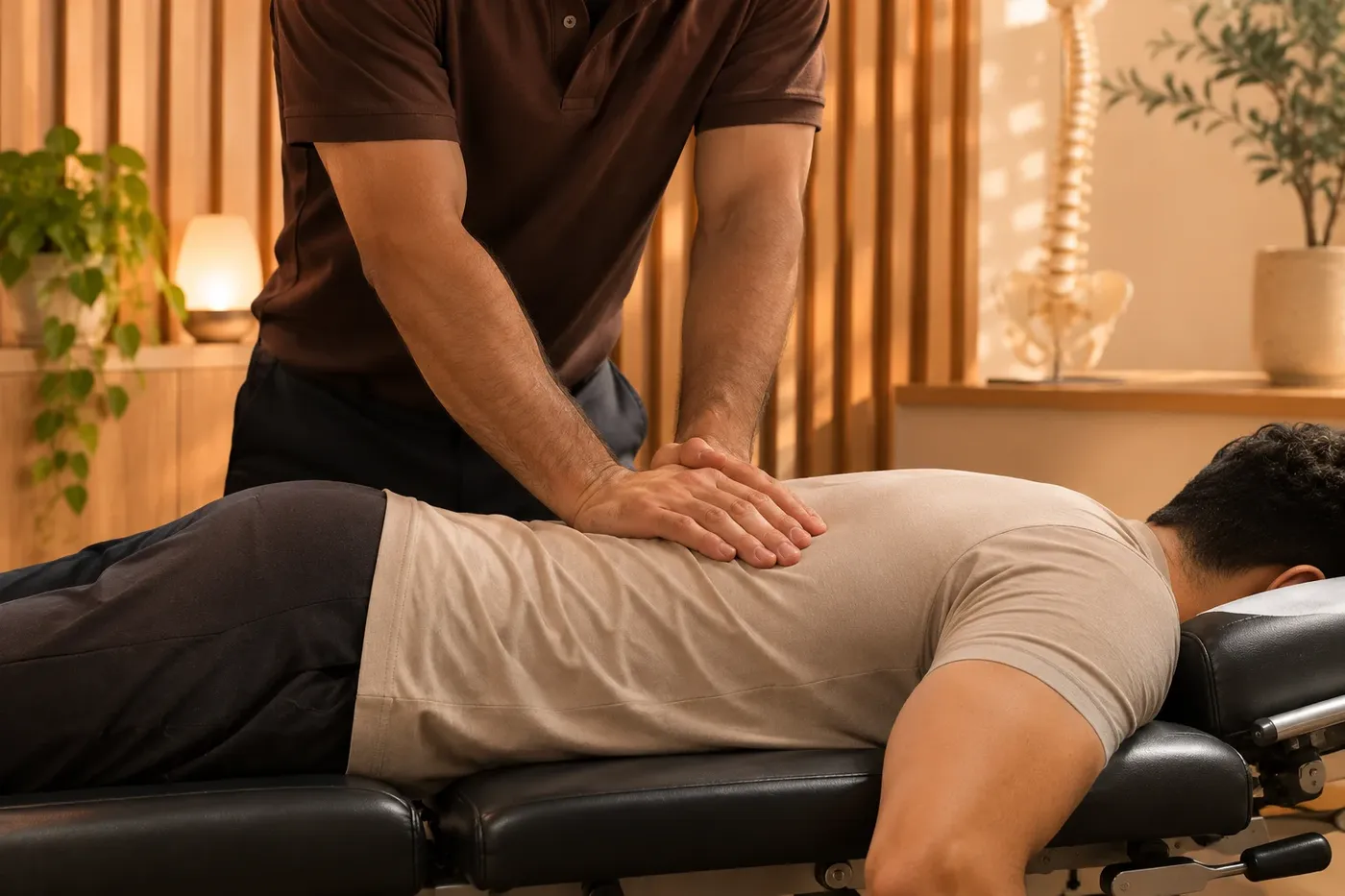
Your plan for disc pain & herniated disc.
Every plan is built from your exam and testing, and adjusted as you improve.
Disc-friendly adjustments
Gentle, low-force adjustments chosen to avoid stressing the injured disc.
Directional preference exercises
Specific movements that, for many people, centralize pain and ease leg symptoms.
Soft-tissue therapy
Easing the muscle spasm that often protects an injured disc.
Step-by-step strengthening
A graded core, glute and hip program to help support the spine.
Movement and lifting coaching
Learning to sit, bend and lift in ways that protect the disc as it heals.
Bauerfeind LumboTrain brace
A back brace fitted in clinic that can add support during flare-ups or demanding tasks.
What you can do at home.
- Find the position that eases your pain, such as lying on your stomach or walking, and use it often
- Avoid long sitting, slouching and bending forward with a rounded back for now
- Take short walks several times a day
- Use a small rolled towel behind your low back when you sit
- Be careful with the first hour after waking, when discs are more sensitive
How long it usually takes
Many disc injuries improve without surgery, often over 6 to 12 weeks, though some take several months. Leg pain often eases before back stiffness does. Your progress depends on the size of the injury, your nerve signs and how well you follow your home plan.
When to see a doctor right away
Go to emergency right away for numbness in the groin or inner thighs, new trouble controlling your bladder or bowels, or weakness in both legs. See a doctor promptly if your leg or foot is getting weaker, you develop foot drop, or your pain is severe and not easing at all.
Serving all of Winnipeg
People come to us for help with disc pain & herniated disc from all over Winnipeg, including The Maples, Garden City, Tyndall Park, West Kildonan, the North End, St. James, St. Vital, Transcona and Fort Garry, as well as Stonewall and Selkirk. Our clinic is at 2358 McPhillips St #1, near Garden City Shopping Centre. We direct bill MPI and WCB, walk-ins are welcome, and our team speaks English, Punjabi and Tagalog. When imaging is needed, we refer directly for digital X-rays at Thrive Chiropractic and ultrasound at Atlas Radiology (we refer, they do the scan).
Your questions, answered.
Can a disc slip back into place?
Discs do not really slip in and out. The soft centre can bulge or push through the outer layer, and many of these injuries settle over time as inflammation goes down and the body heals.
Will I need surgery?
Most people with disc injuries do not. Surgery is usually considered only for severe or worsening nerve problems or when careful care has not helped, and that decision is made with your doctor and a specialist.
Is it safe to have my back adjusted with a disc problem?
We choose gentle techniques suited to disc injuries and test how your back responds first. If an adjustment is not right for you at that stage, we use other options.
We also help with.
Ready to move better?
Book your first assessment with Dr. Raman Gill. Walk-ins are welcome, and we direct bill most insurance plans.
Winnipeg, MB R2V 4J6
This page is general information, not a diagnosis. Every patient is assessed individually.