
TMJ & Jaw Pain treatment in Winnipeg
Clicking, locking or pain in the jaw is often linked to tight jaw muscles, clenching and neck posture.



We treat the jaw and the neck together with gentle joint work, muscle release and simple jaw exercises, so chewing and talking feel normal again.
Is this what you feel?
Common signs of TMJ & jaw pain, and what usually causes it.
What it feels like
- Pain in the jaw, in front of the ear or at the temple
- Clicking or popping when you open your mouth
- Jaw that locks or catches when opening or closing
- Trouble opening your mouth wide or chewing hard foods
- Earache-like pain or a feeling of fullness in the ear
- Headaches or neck pain along with jaw pain
What usually causes it
- Clenching or grinding your teeth, often during sleep
- Stress that builds tension in the jaw muscles
- Forward head posture that changes how the jaw sits
- Chewing gum often or eating very hard or chewy food
- A blow to the jaw or a whiplash-type injury
- Long dental appointments with the mouth held wide open
An assessment, not a sales pitch.
We ask about your jaw pain, clicking or locking, grinding habits, stress and any dental history. Dr. Raman watches how your jaw opens and closes, measures how wide you can open, gently feels the jaw joint and chewing muscles, and checks your neck and posture, since they often play a part. We explain what we found and start gentle treatment, and we will suggest seeing your dentist if your bite or teeth may be involved.
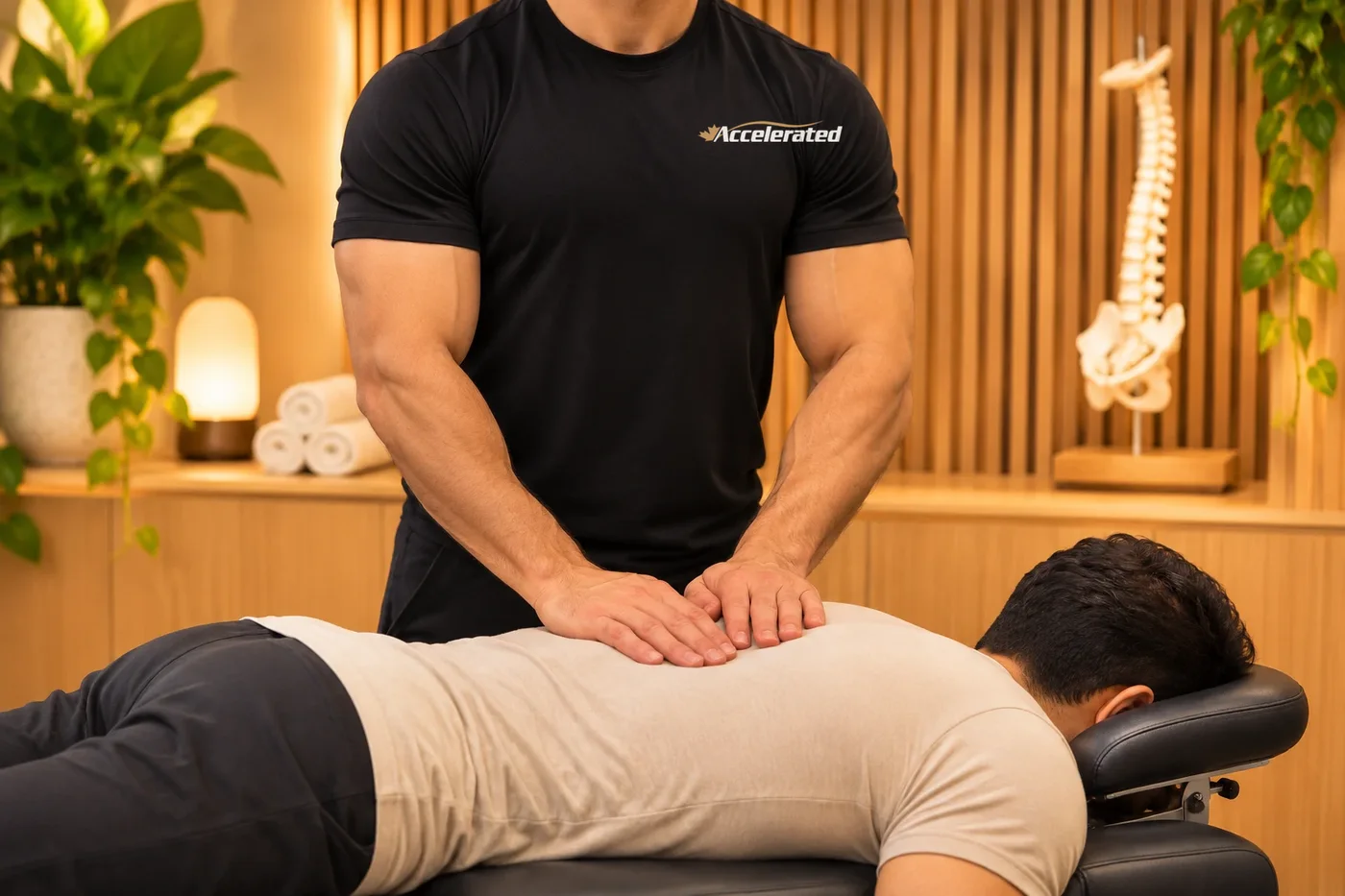
Your plan for TMJ & jaw pain.
Every plan is built from your exam and testing, and adjusted as you improve.
Gentle jaw joint mobilization
Careful, low-force movements to help the jaw joint glide more smoothly.
Jaw muscle release
Hands-on work on the chewing muscles at the side of the face and temples that tighten with clenching.
Neck adjustments
Treating stiff upper-neck joints, which are closely linked to jaw tension and pain.
Jaw control exercises
Simple drills to help your jaw open in a straight line without clicking or drifting.
Posture retraining
Reducing forward head posture so the jaw can sit and move more naturally.
Teamwork with your dentist
If a night guard or bite check may help, we will suggest it.
What you can do at home.
- Rest your jaw with lips together, teeth slightly apart and tongue resting on the roof of your mouth
- Choose softer foods and cut food into smaller pieces during a flare-up
- Avoid chewing gum, biting your nails and very wide yawns
- Use gentle heat on the jaw muscles for 10 to 15 minutes to relax them
- Notice daytime clenching and remind yourself to unclench and relax
How long it usually takes
Many people with jaw muscle tension notice less pain and easier chewing within a few weeks of care and home habits. Longer-standing clicking, locking or grinding problems can take longer and may need help from your dentist too. How fast you improve often depends on how well clenching and stress can be managed.
When to see a doctor right away
See a doctor or go to emergency if your jaw locks open or closed and will not move, or if jaw pain comes with chest pain, shortness of breath or sweating, which can be a sign of a heart problem. Also see a doctor or dentist promptly for jaw swelling, fever, or a jaw injury with trouble closing your teeth together.
Serving all of Winnipeg
People come to us for help with TMJ & jaw pain from all over Winnipeg, including The Maples, Garden City, Tyndall Park, West Kildonan, the North End, St. James, St. Vital, Transcona and Fort Garry, as well as Stonewall and Selkirk. Our clinic is at 2358 McPhillips St #1, near Garden City Shopping Centre. We direct bill MPI and WCB, walk-ins are welcome, and our team speaks English, Punjabi and Tagalog. When imaging is needed, we refer directly for digital X-rays at Thrive Chiropractic and ultrasound at Atlas Radiology (we refer, they do the scan).
Your questions, answered.
Why would a chiropractor treat my jaw?
The jaw joint is a joint like any other, and its muscles are closely linked to the neck. Treating the jaw, neck and posture together can help ease pain and clicking.
Will the clicking ever go away?
Sometimes it lessens or stops, but a click with no pain is not always a problem. Our main goal is to reduce pain and help your jaw move smoothly and comfortably.
Do I need a night guard?
A night guard can help some people who grind or clench at night. That is something your dentist can assess and make for you, and we can work alongside it.
We also help with.
Ready to move better?
Book your first assessment with Dr. Raman Gill. Walk-ins are welcome, and we direct bill most insurance plans.
Winnipeg, MB R2V 4J6
This page is general information, not a diagnosis. Every patient is assessed individually.