
Shin Splints treatment in Winnipeg
Shin splints are pain along the inside of the shin, usually from doing too much running or jumping too soon.
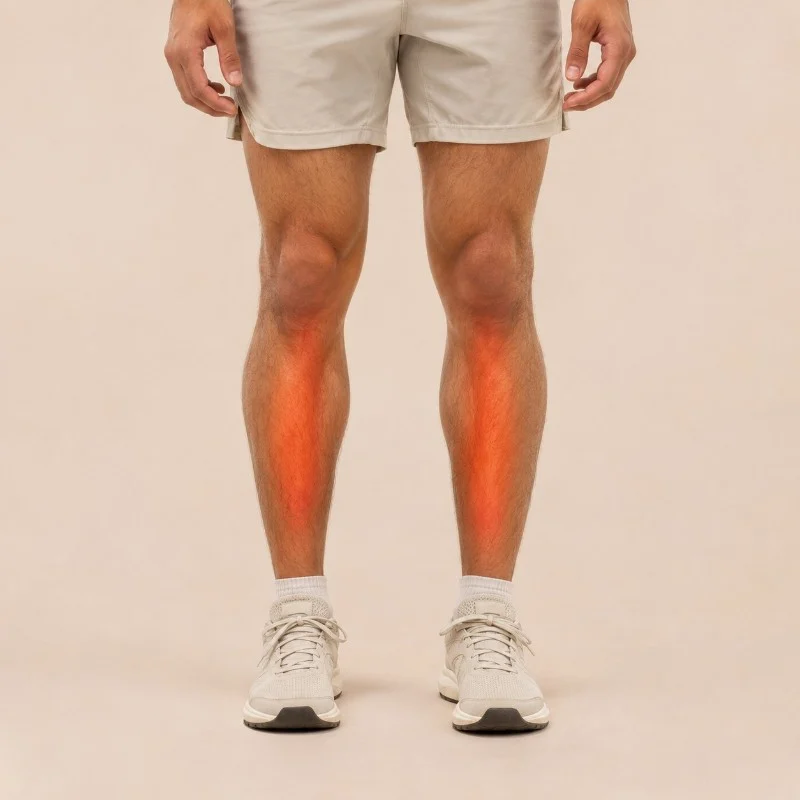


We look at your running mechanics and footwear with GaitScan, treat the tight calf and shin muscles and plan a gradual return. Compression sleeves can help recovery.
Is this what you feel?
Common signs of shin splints, and what usually causes it.
What it feels like
- Aching or sharp pain along the inside edge of the shin
- Pain at the start of a run that may ease, then return after
- Tenderness along a stretch of the shin bone
- Mild swelling along the lower leg
- Soreness the morning after running or jumping
- Tight, sore calves
What usually causes it
- Increasing running or jumping too fast
- Running on hard surfaces
- Worn-out or unsupportive shoes
- Feet that roll in a lot when you run
- Tight calves or weak hip and leg muscles
- Starting a new sport or season after time off
An assessment, not a sales pitch.
We ask about your training, surfaces and shoes, then press along the shin and test your calf, ankle and hip strength and flexibility. A GaitScan shows how your feet land and push off, and we may watch how you move or run. We explain what is causing the strain, check for signs of a stress fracture, and start treatment.
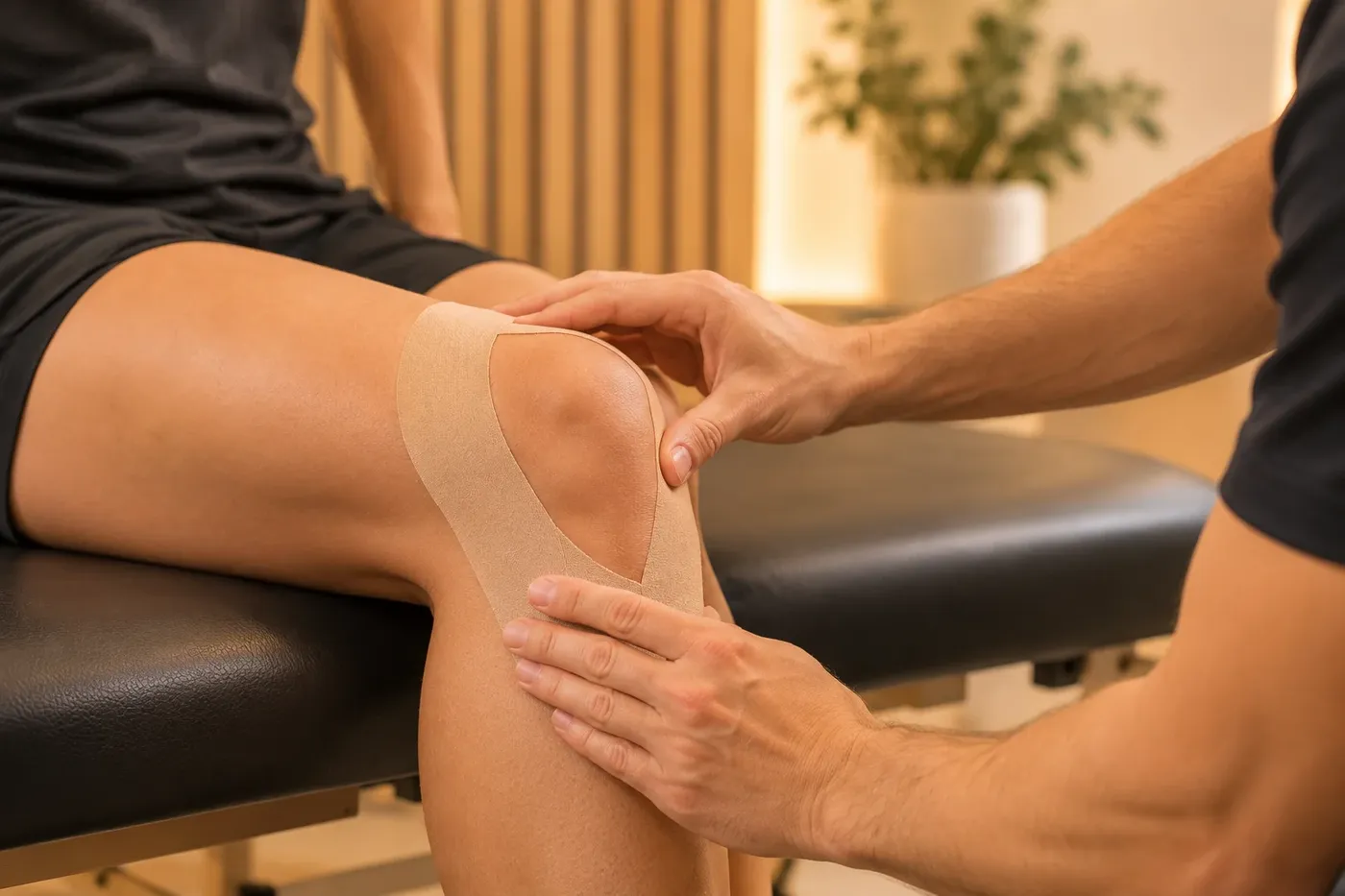
Your plan for shin splints.
Every plan is built from your exam and testing, and adjusted as you improve.
Soft-tissue therapy
Easing tight calf and shin muscles.
Load management
Adjusting running or training volume so the shin can recover.
Strengthening
Building the calf, foot and hip muscles that absorb impact.
GaitScan and footwear review
Checking your foot mechanics and whether shoes or orthotics could help.
Compression sleeves
Sigvaris compression fitted in clinic to support recovery after activity.
Graded return plan
A step-by-step return to running and jumping.
What you can do at home.
- Cut back on running or jumping for a while, and cross-train with cycling or swimming.
- Use ice on the sore area for 10 to 15 minutes after activity if it helps.
- Run on softer surfaces like grass or trails when you return.
- Replace running shoes when the cushioning is worn out.
- Increase your training slowly, by a small amount each week.
How long it usually takes
Many people with shin splints feel better within a few weeks of reducing load and starting the right exercises. Returning too fast is the most common reason it comes back. Your timeline depends on how long you have had symptoms and how much your sport demands.
When to see a doctor right away
See a doctor if there is pain in one small spot on the bone, or pain at rest or at night, since these can be signs of a stress fracture. Severe pain, tightness, numbness or weakness in the lower leg that does not settle after you stop exercising, especially after an injury, needs emergency care.
Serving all of Winnipeg
People come to us for help with shin splints from all over Winnipeg, including The Maples, Garden City, Tyndall Park, West Kildonan, the North End, St. James, St. Vital, Transcona and Fort Garry, as well as Stonewall and Selkirk. Our clinic is at 2358 McPhillips St #1, near Garden City Shopping Centre. We direct bill MPI and WCB, walk-ins are welcome, and our team speaks English, Punjabi and Tagalog. When imaging is needed, we refer directly for digital X-rays at Thrive Chiropractic and ultrasound at Atlas Radiology (we refer, they do the scan).
Your questions, answered.
Can I keep running with shin splints?
Sometimes, at a lower level, if pain stays mild. Often it is better to cross-train for a while. We will help you find a safe amount.
How do I know if it is a stress fracture?
Stress fractures usually cause pain in one small spot and pain at rest or at night. If we suspect one, we will refer you for imaging.
Will new shoes fix it?
Shoes can help, but they are usually one part of the picture. Training load, strength and how your feet land all matter too.
We also help with.
Ready to move better?
Book your first assessment with Dr. Raman Gill. Walk-ins are welcome, and we direct bill most insurance plans.
Winnipeg, MB R2V 4J6
This page is general information, not a diagnosis. Every patient is assessed individually.